Getting Ready for Drama Work
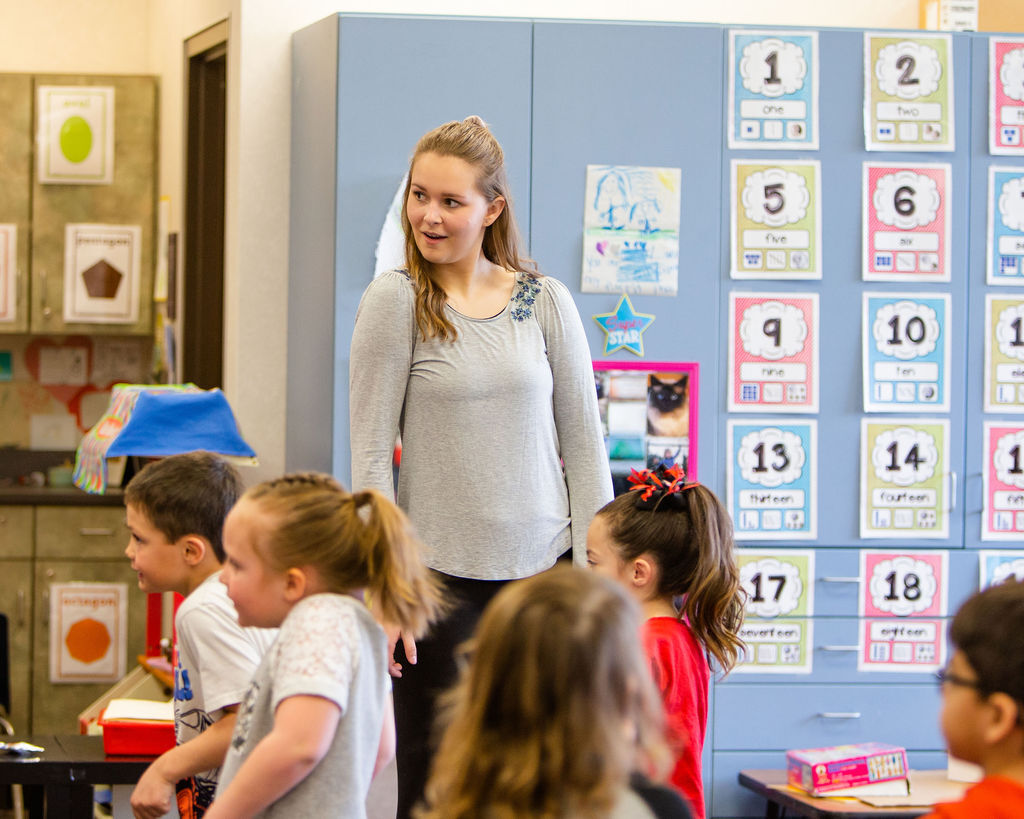
Drama is social, communal, communicative, performative, and imaginative. Adequate development of these skills requires students to practice drama warm-ups. Essential for tuning awareness and personal temperament, the warm-ups exercises explained in this blog allow students to easily call upon their voices, bodies, and imaginations to produce better quality drama work. (This preparatory step is as important to a theatre artist as it is to a musician, dancer, or an athlete.)
Become an Ensemble
Task students to become an ensemble within a created performing space. Specifically, this process might involve students setting up the classroom to be ready for a theatre game; moving tables to the side in order to create a community circle; clearing off desks and pushing in chairs to create individual acting spaces; walking down the hall to the gym in some specific way; and entering that prepared space ready to work. Directions include getting ready quickly, helping all to be included, and respecting one another’s personal space as well as the classroom environment.
Sample Directions:
“By the time I count to fifteen, let’s have our space cleared, and all students comfortably seated in a circle. And today, let’s try doing this with no vocals! You’re going to have to figure how to do this without words or noises! Ready? Begin."
Engage Creative Choice
Invite each student to engage their body, voice, and mind to make and perform creative choices. This could involve using a theatre game or other drama warm-up which clearly links to the focus of the drama lesson.
Sample Directions:
"Let’s play 'In the Manner of the Word.' I need one person to go out in the hall until we come get you. While you are gone, we will choose and agree on an adverb, such as 'quickly' or 'sadly' or 'sneakily.' When you come back in, you will stand in the circle and ask one of us to do an activity 'in the manner of the word.' Perhaps, 'Eat breakfast in the manner of the word' or 'Play piano in the manner of the word,' and so forth. You can ask a few different people, but you only have three guesses. Remember everyone, we're all working together to try to communicate the adverb clearly."
Side Coaching
Teachers can act as side coaches during the first and second tasks. Side coaching helps focus students on their ensemble work, emphasizes their communicative, performative and imaginative choices, and facilitates praising and challenging students until they are warmed up and ready to engage in drama-integrated learning.
Sample Side Coaching Sounds Like:
”Wow, you all are clearing this room using no words, but I still hear some sounds! Let’s use gestures, and no verbal language!” “Josefina’s face seems to be inviting others to fill in this side of the circle! Let’s see you respond.” Or, “My word, they guessed our adverb 'sneakily' so quickly. Charlie, you really made a great choice to show us with your whole body what 'sneakily' really looked like. Even your fingers looked sneaky! Nice work!”


