Lead Sheet for Leadership
Lead Sheet for Leadership
Written by Cally Flox, director of the BYU ARTS Partnership
The Purpose of a Leadsheet
When musicians enter a studio to play together, a lead sheet is provided to give them key information for successful ensemble work. The lead sheet indicates the meter, chord progressions, melody, and sometimes words for a vocalist. Together the musicians select the key signature and the tempo. The synergy of the musicians, each adding their unique skills, sparks the magic: the skills and experience of the musicians bring the music to life, guided by the minimal instructions on the lead sheet. Often, featured solos highlight the unique voices of individual artists and their instruments in authentic conversational exchanges; soothing sounds, blended harmonies and syncopated rhythms emerge. The mood changes with minor keys, accents, and dissonant counterpoints. Each performance is a distinct exchange between the musicians that only those present will hear, transforming those who are willing.
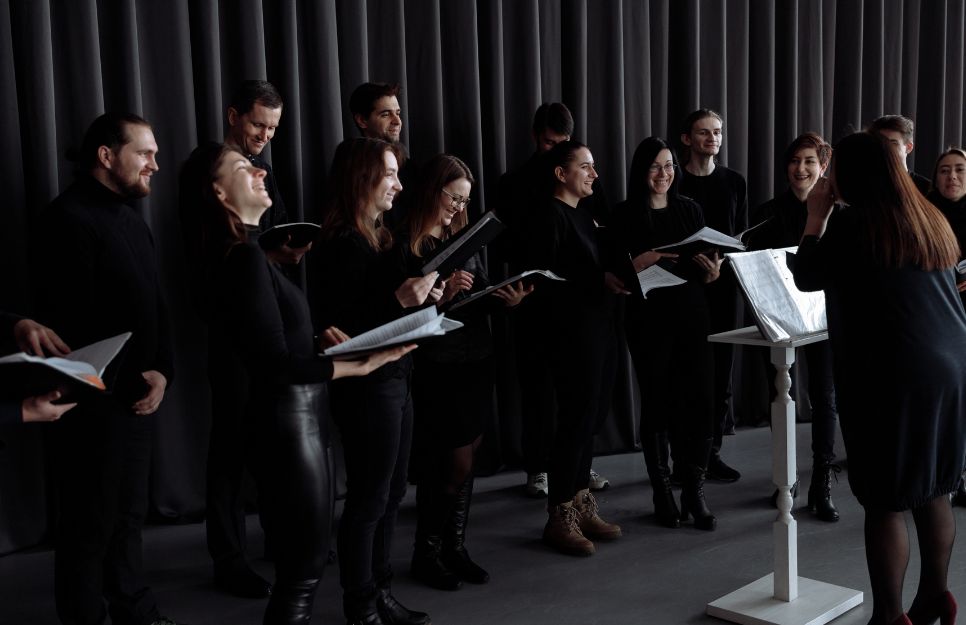
In the BYU ARTS Partnership, the leadership team works as an ensemble of performing artists according to the principles from the Lead Sheet for Leaders provided below. Each principle on the lead sheet elicits harmony and inclusion. We invite you to join our chorus!
1. Relationships: Embrace the power of having no authority.
There is power in having no authority: this attitude keeps us humble and elicits elements of servant leadership. Since most of us have no positional or legitimate authority to create policy or dictate change, we have to build strong relationships and meaningful connections with others in order to do our work well. Our credibility and effectiveness is developed one experience and one relationship at a time.
2. Resonation: Connect with others through shared values.
Find the people with whom you resonate, who share your values and your vision. Acknowledge them when they find you. A unified team emerges as each member contributes to the actualization of shared goals. Focus on the most capable, like-minded people in your sphere of influence, then encourage them to step up and take on leadership responsibilities.
3. Inspire: Help others identify their strengths.
Just as people learn best through their strengths, people also lead best through their strengths. Recognize and leverage your strengths to do your best work. Then, invigorate and reassure others by identifying what they do well and supporting their good work. Celebrate the positive contributions of students, colleagues, and community members. Good things turn into great things when they are nurtured and honored.
4. Lean In: Be prepared and do the work.
Like an actor on stage, arrive in costume, warmed-up, ready with your lines memorized and focused on the task at hand. Lead by example and show those around you how important quality work is to you through consistently showing up prepared and being consistent in your work.
5. Authenticity: Bring authenticity and vulnerability to your role.
Artists take a risk each time they exhibit their work. They may feel vulnerable to the responses of others as they share their work for all to see. Take your turn to step onto the stage and share your experience and your ideas. Ask for feedback and help from others, then graciously consider their responses.
6. Possibility: Explore options by playing the improv game “Yes, and...”
Encourage innovation by saying “yes” as often as you can. When approached with a new idea, use the phrase, “Yes, and...” so that the conversation continues until you both understand the emerging idea and the relevant parameters. Saying “yes” ensures you are listening. Saying “and…” exposes potential challenges and possible solutions to illuminate the conditions for success.
7. Passion: Harness your passion.
People involved in the arts are often deeply committed to the work. Your passion is your greatest gift, but when shared in excess your passion can overshadow the needs and passions of others. Allow your passion to inspire your commitment and to drive your work ethic and energy, but not to galvanize your opinions.
8. Listen, Learn, Lead
As leaders listen to others and continue to learn, they know when to lead and when to follow. Mutual respect elevates relationships into collegial collaborations where educators accomplish great work together. As each team member steps into the spotlight and back into the ensemble, the strengths of each performer is showcased to produce an exciting show.

This year in the BYU ARTS Partnership, our goal is to elevate educators as school and community leaders who implement the arts to improve student learning and school culture. Every school needs multiple teacher leaders to meet the pressing demands of the profession. Please consider how you can contribute as a teacher leader this year. What strengths can you uniquely contribute? What do you feel passionate about?
Share Your Story
Share your stories with us! How do you embody these leadership qualities? Who has inspired you to lean in and do the work? Who has given you permission to be creative by saying, “Yes, and…” When were you able to be authentic? When have you inspired others?
Elevate others by sharing your story. Comment below or email artspartnership@byu.edu.
Cally Flox is the founding director of the BYU ARTS Partnership. She is a licensed administrator with a master's degree in Educational Leadership from Brigham Young University. Cally taught dance, math, and physical education in public schools and is a board member for Dance and the Child International (daCi), Utah Chapter. Cally consistently spends her personal and professional time engaging with people in the arts.


