The Native Voices Framework: Amplifying Native Voices in K-12 Education
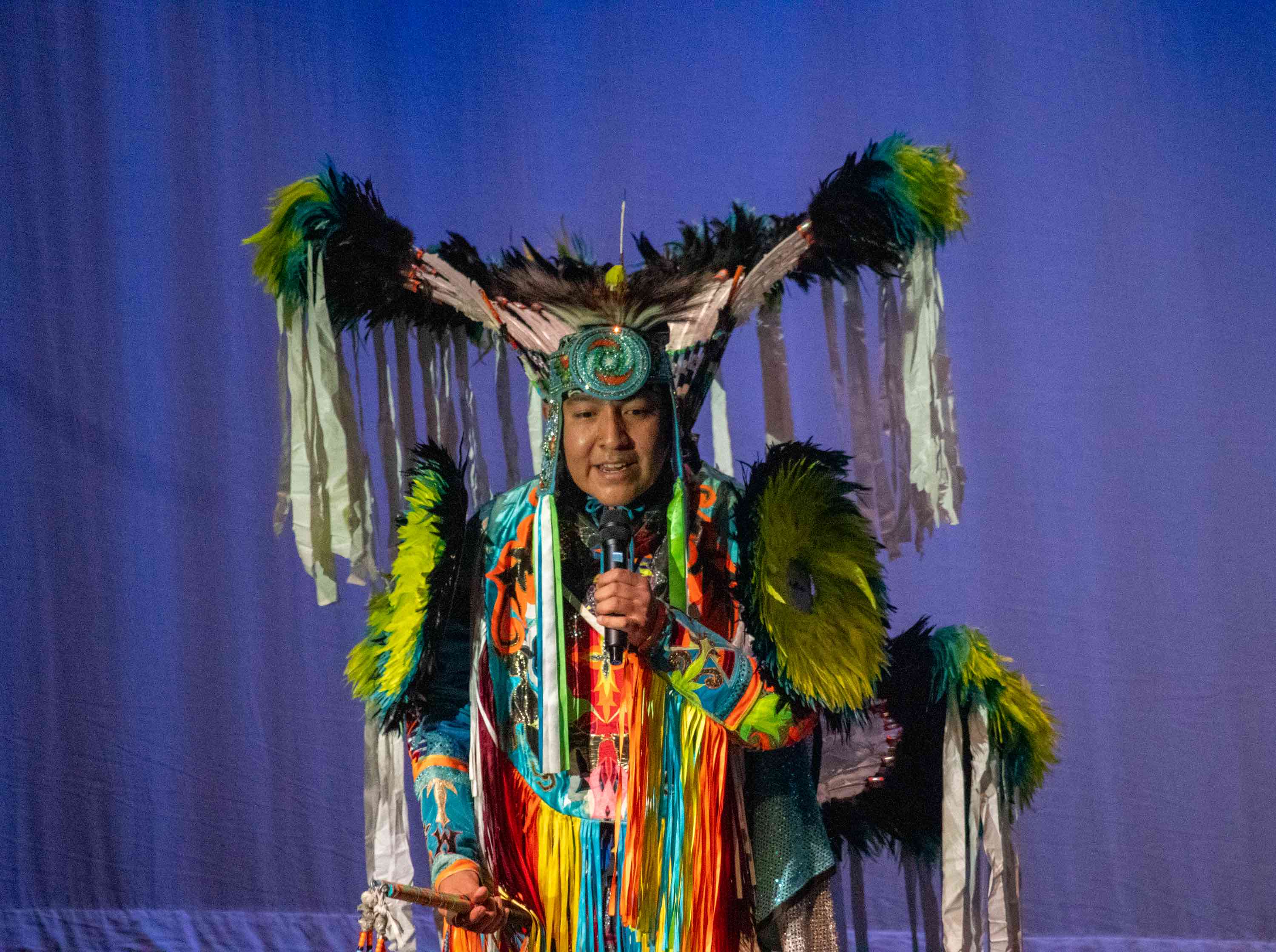
Have you ever wondered how to authentically incorporate Native American perspectives into your classroom? Do you find yourself struggling to navigate the complexities of teaching Native American subjects when you're not Native American yourself? You are not alone. Many teachers struggle to teach Native topics and are fearful of making mistakes. The most powerful way that teachers can accurately and authentically include Native content in their classes is to amplify Native voices in their teaching of Native topics.
There are many barriers to including Native perspectives in education. Due to historical oppressive acts, many Native languages and cultural practices have been lost. While many current efforts are seeking to preserve Native culture, historical influences on education have created spaces where Native knowledge (holistic, moral, spiritual, oral, inherited wisdom) is viewed as a lesser form of knowledge to Western knowledge and ways of knowing.
The Native American Curriculum Initiative has provided a resource to help teachers evaluate and choose Native educational resources. Additionally, we have developed the Native Voices Framework that can help you to 1) understand the various Native perspectives available to you in your teaching and 2) provide insight into how these Native perspectives and your teaching may be influenced by both Native and Western values.

Working Together
The shape of the framework is a circle to communicate the interconnectivity that exists between all of us as well as our connection to the land. The joined hands that surround the circle communicate the need for all of us (educators, administrators, parents, students, Native Americans, and non-Native Americans) to work together to have the greatest impact.
Embedding Teaching in Native Values
The foundation of the framework is focused on the various values that influence our teaching. These values determine the what, how, why, when, and where of learning. While both Native and Western values can positively or negatively affect education, we encourage teachers to embed their teaching of Native topics within Native values and to reduce the influence of Western values. In this way, students can learn from Native Americans rather than learning about them.
We respectfully recognize the diversity of Native communities in the U.S., including the 574 federally recognized Native American tribes in the United States and many others that are not federally recognized. To help teachers connect Native teaching to Native values, the framework identifies five cultural values that we believe cross tribal boundaries. These include community, relationship, responsibility, reciprocity, and holism.
- Community is deeply integrated into Indigenous pedagogies, emphasizing collective decision-making and extended kinship structures. This stands in contrast to Western education, which tends to be specialized and compartmentalized.
- Holism, another key value, focuses on attending to the entire individual, including cognitive, physical, emotional, personal, moral, social, cultural, and academic aspects simultaneously.
- Relationships are fundamental to Native culture, extending not only to other individuals but also to the land and higher beings. Within education, the value of relationship is exhibited through side-by-side instruction, intergenerational learning, and instruction that communicates the importance of responsibility and reciprocity, which are described below.
- Responsibility comes as a result of our relationships with each other and with the land. Leadership and the receiving of Native knowledge are deeply connected to a sense of responsibility that naturally develops from interconnected relationships and a focus on community well-being.
- Reciprocity, which is a slightly more explicit form of responsibility, describes the principle of giving and receiving in turn with a humble and grateful heart. As a result, respectful relationships are fostered and the entire community benefits.
It is also helpful to be aware of how Western values influence educational decisions. For years, these values have predominantly influenced educational spaces.
- Scientific skepticism has affected many educational standards, which emphasize maintaining a skeptical view of the world and rely on objective knowledge and physical evidence.
- Singularity has grown from an emphasis on skepticism and is evidenced by education that emphasizes finding the right or correct answer.
- Individualism is deeply ingrained into U.S. identity. This focus on the individual helps us to recognize and meet individual needs and encourages self-reliance, independence, and personal improvement.
- Compartmentalization naturally arises from an emphasis on individualism and objective knowledge. Knowledge is broken down and often separated from its context to simplify instruction and testing. Singularity, individualism, and compartmentalization are also strongly emphasized in standardized assessments and the pressure teachers feel to customize their teaching for these assessments.
Both value systems can have positive and negative effects. Whichever is emphasized changes instructional decisions. The goal is not to remove Western values from education, but to bring more balance to educational spaces by maintaining the connection between Native knowledge and Native values. In this way, the teaching of Native topics can have more depth, richness, and authenticity.
Visually, these values are depicted in the framework on a spectrum with red and black colors. The red and black gradient of the circle communicates how instruction can be influenced by one group of values or the other or by a mixture of both.
Emphasizing Native Perspectives
The next level of the Native Voices framework communicates the importance of emphasizing Native perspectives when teaching Native topics. The gradient of red and black colors are used in this part of the image to communicate how various Native perspectives can also be influenced by both Native and Western values depending on where they live and how firmly connected they are to Native language, knowledge, and culture.

Four categories of Native perspectives available to teachers include:
Knowledge keepers & culture bearers: Individuals, often Elders, who have assumed a stewardship and feel responsible for preserving and sharing Native knowledge.
Official voices: Individuals or groups of individuals, like tribal councils, that are usually elected or appointed. They can speak on behalf of a Native tribe or nation and can provide definitive guidance on the appropriate use of cultural knowledge. Just like any elected position, the guidance can change as those holding these positions change.
Authentic voices: Individuals that can share their own lived experiences, providing insight into the distinctiveness of different Native groups and individual experiences.
Informed voices: Native or non-Native individuals that may not have had an experience themselves but can share their thoughts about what they have learned from their close association with and study of others who have had an authentic experience.
For the Benefit of ALL Children
The center of the framework communicates our belief that more accurate and authentic understanding of Native topics, through embedding teaching in Native values and emphasizing Native perspectives, will benefit both Native and non-Native children.

How to Use the Framework
We invite you to consider the Native Voices Framework when you next teach about Native Americans. To use the Native Voices framework, teachers should seek to:
- grow their understanding of Native cultural values and Western cultural values and how they influence educational decisions
- continuously and actively reflect on the values that are influencing their decisions regarding what information they share about Native Americans, how it is shared, and why they are sharing it
- consider ways that they can amplify various Native perspectives—knowledge keepers and culture bearers; official voices; authentic voices; and informed voices—so that they and their students learn “from” Native Americans, rather than learning “about” Native Americans
- prioritize educational resources that communicate Native cultural values and are taught in ways that emphasize those values
Some resources that teachers can use to help them as they include Native perspectives and Native values in their teaching include:
- Native co-created and tribal approved lesson plans on the NACI lesson plan website
- The Utah Division of Arts and Museums Native American teaching artist roster
- The Amplify Native Voices in the Classroom 1 credit online teacher professional development course
Since it is always helpful to have examples, we will be publishing a podcast where we talk about ways members of the Native American Curriculum Initiative have included Native values and Native perspectives in their teaching of Native topics and how they have seen other teachers do this. When it is published, you can find the link to the NACI podcast on the Native Voices Framework here on this blog post.
We also send out links to our podcasts in our monthly NACI newsletters. If you would like to receive the newsletter, you can sign up for the NACI newsletter here.
Podcast:
|
|


