Newsletter #23: Me on the Map
Charlotte Hawkins
Beverley Taylor Sorenson visual arts educator
I used to get lost. Intentionally. As a child, my siblings and I would get on our bikes and see if we could find “undiscovered places.” I blame pirate movies and treasure maps. It was a different time when, during long summer days, we were told to pack a lunch and be home by dark.
Sometimes we did get lost. Mostly we didn’t. We knew where the dangerous intersection was. The steep hill next to the pond, the scary dogs behind the fence on the corner, and the penny candy store near the school. Everything important was an extension of me: the house where I lived, the school I attended, and the pond where I could swim or fish. I had created a map in my mind — and used it nearly every day.
Exploring your relationship with a place and mapping out an area require visible thinking. Project Zero (PZ), a Harvard Graduate School of Education initiative, has a thinking activity to construct a map and understand complex structures — like spatial relationships.
Have students sketch or build a map of their neighborhood or local area, as they see it through their eyes. This map does not have to be accurate or similar to existing maps. They can draw the map on paper or create a 3D map (try using recycled materials!).
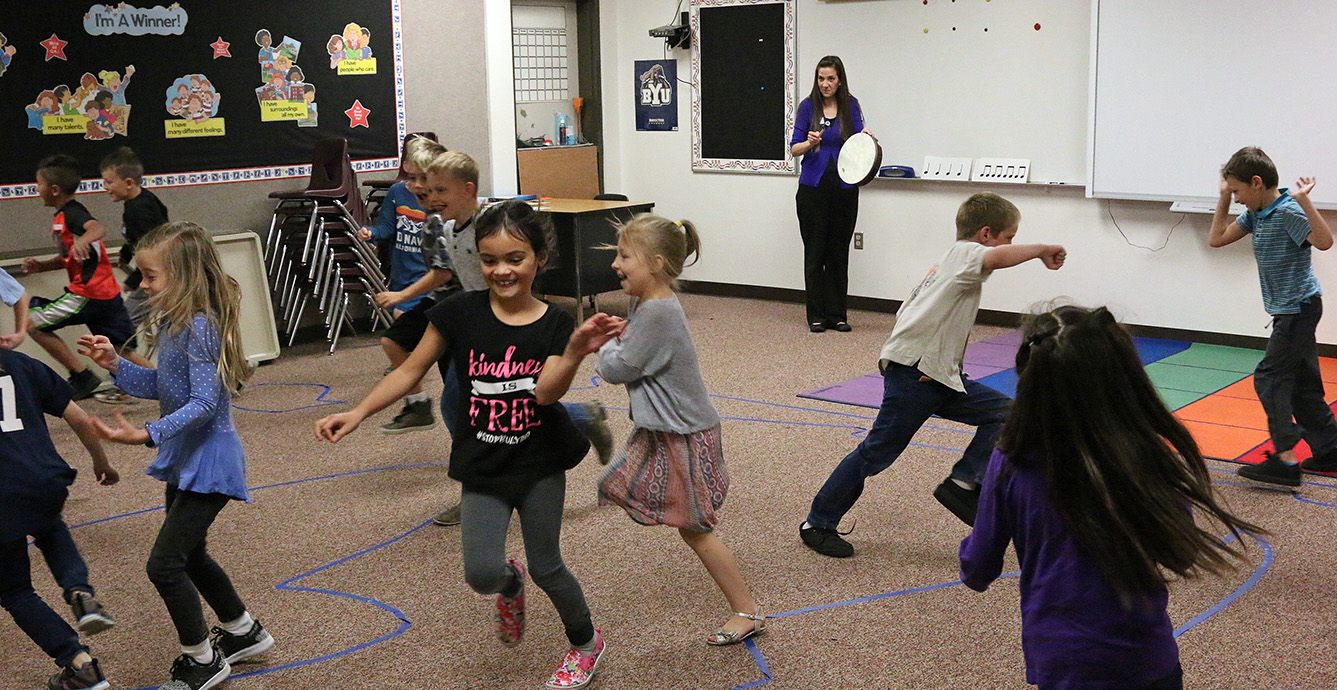
Another idea would be to tell a map. Have a student explain to a neighbor or group how they got to school that day, what buildings they passed, what landmarks they used to get to and from school. They could create a dance that depicts the journey, or reenact the route by recruiting classmates and casting them in the leading roles (crossing guard, mom, dad, siblings, etc.).
After creating maps, share the maps. Reflect: Ask students how this activity has changed their view of their neighborhood. Are they seeing things differently?
Mapmaking is part of the Utah Social Studies Core in grades K-3. Using this thinking activity will connect students to their place in the world and help them develop mental models of that place. Being able to verbalize or construct a map requires higher-level cognitive thinking, and makes that thinking visible.


