Newsletter #27: Beginning, Middle, End
Charlotte Hawkins
Beverley Taylor Sorenson visual arts educator
I’ve always been fascinated by Hokusai’s painting The Great Wave off Kanagawa (1831). It is iconic. A towering rogue wave, men struggling against nature in boats, Mount Fuji in the background, all carved into delicate lines on wooden blocks which are painstakingly registered and printed one color at a time. The print, one of a series of Thirty-six Views of Mount Fuji, earned him immediate success, international fame — it inspired the Impressionists, and is still copied and replicated today.
As I look at The Great Wave or other artworks, I often ask myself, “What’s the story here? Is it the beginning of the story? Is it the middle of the story? Will this be the end?”
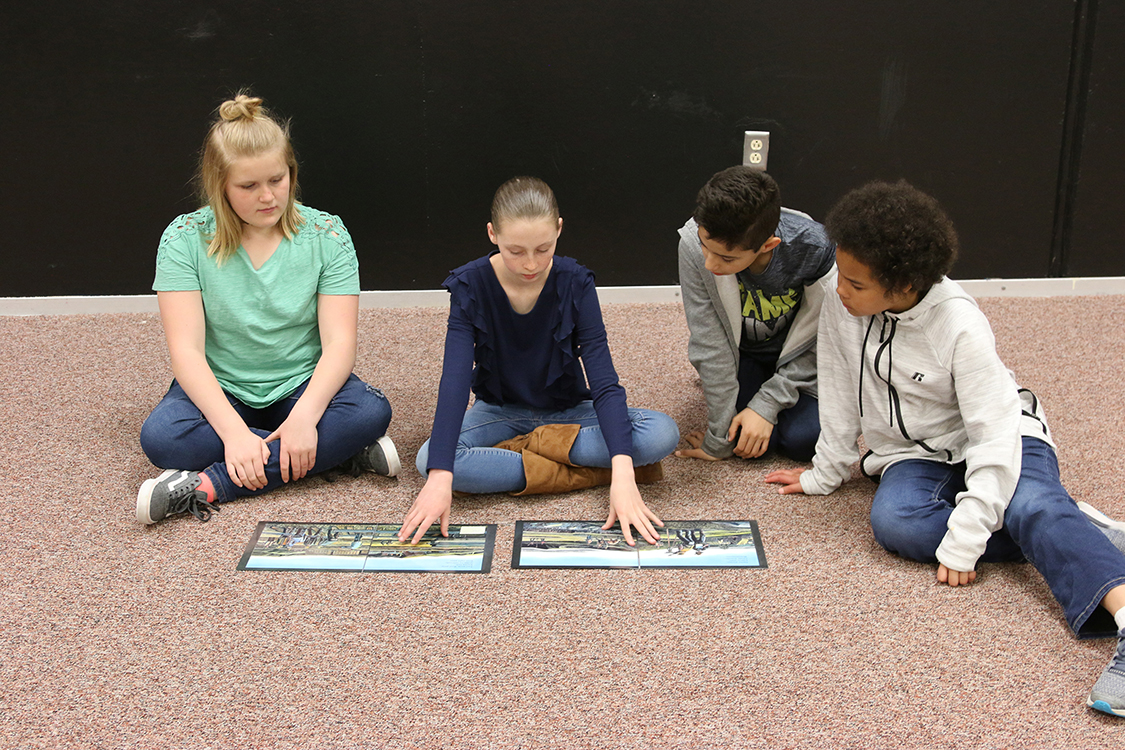
Project Zero, a Harvard Graduate School of Education initiative, creates simple, research-based thinking strategies, which enable students to reflect, expand or create a narrative. Beginning, Middle, End is a thinking routine developed by researchers at Project Zero to do just that, get students to look at an image or object, and tell a story.
This thinking routine goes hand-in-hand with ELA core standards to read and write, providing details of events in sequential order. By working through this routine with students, you are eliciting evidence-based narrative and encouraging connection and meaning making. Students will be connecting their imaginations with language standards!
- Set up: Choose an image, artwork, or sculpture. If you are linking it to curriculum, add questions based on those topics. Choose one of the following questions:
- Ask: “Is this the beginning of the story, and if so, what happens next?”
- Ask: “If this is the middle of the story, what happened before and what will happen next?”
- Ask: “If this is the end of the story, what is the story?”
This routine is especially effective as a writing activity. To generate more details and elicit deeper meaning, use Looking 10 x 2 in conjunction with Beginning, Middle, End. Students have vivid imaginations, and stories to tell. Give them the opportunity to develop those narratives, and find out what happens next.


