Newsletter #28: The Liminal Space
Charlotte Hawkins
Beverley Taylor Sorenson visual arts educator
Liminal: the transitional space between who you once were and who you are becoming. I’ve been in a liminal space for a while. A mother of adult children. A teacher for 24 years. A student. A wife. A friend. An artist. A runner. A gardener. It turns out, you’re never done growing. “Let her cook!” isn’t just a comment for the kitchen, it’s a metaphor for life. And that’s okay. I’m still cooking. I’m changing and growing.
“Understanding is a performance of acting flexibly,” says Ron Ritchhart. I’ve learned over 50(ish) years that flexibility is the key. It’s good to add to what you know. It’s great to experience more, and it’s best when what you learn pushes you. Change can be good.
How, as educators, can we prepare students for the complexities of change? How can we help them learn that the liminal space is good? That flexibility and a growth mindset are necessary tools for life?
Project Zero, a Harvard Graduate School of Education initiative, creates simple, research-based thinking strategies, which enable students to think flexibly and grow.
Tug of War is a thinking routine to get students to explore the complexity of “fairness” in a dilemma or a complex situation. The idea behind Tug of War is to give children a metaphor, like a children’s playground game, to demonstrate the “pulls” of various factors in a problem.
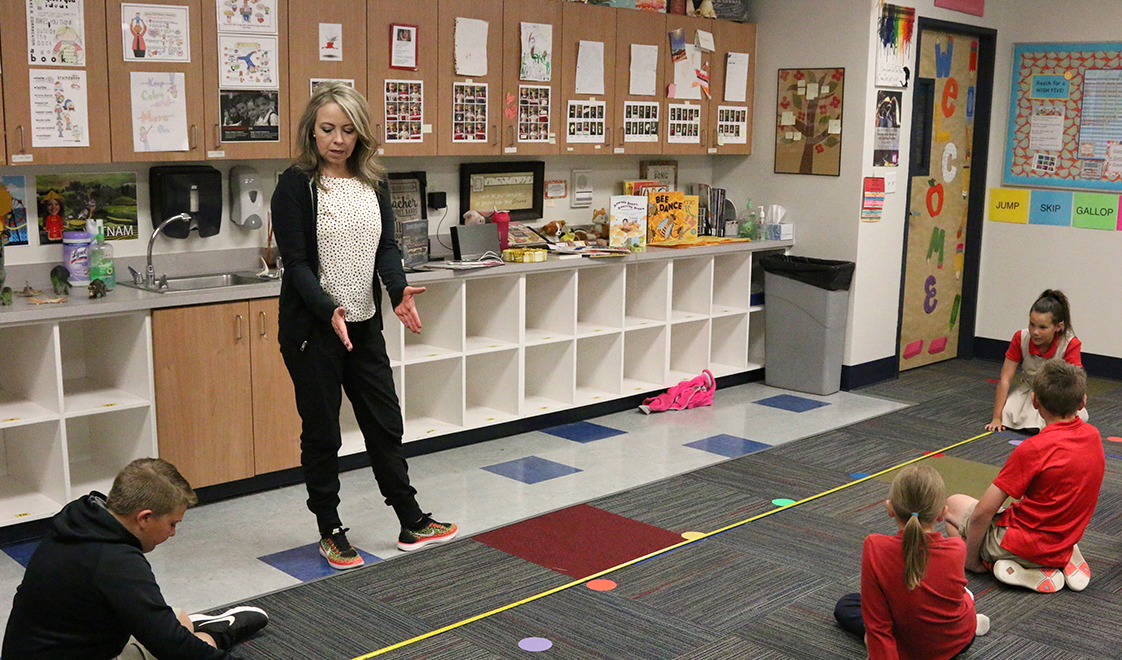
I saw Tug of War effectively used in a classroom as the teacher discussed the topic of banning cell phones in schools. The students discussed the issue, and placed their names or icons on a rope. The middle of the rope represented “neutral opinion,” the right side of the rope was “don’t ban cell phones” and the left side was “ban cell phones.” As the year progressed and knowledge and discussion added to the pool of knowledge, students were allowed to move their icons on the Tug of War rope.
To set up for a Tug of War in your classroom, you’ll need a space to place a line on a wall or board, or perhaps tape on the floor. This rope can stay for a week or several months as group documentation to flexible thinking.
- Present a “fairness” issue.
- Identify the factors that pull at each side of the debate. These are the two sides of the rope.
- Ask students to think of reasons why they support a side. Ask them to think of reasons for the other side, as well.
- Generate “what if” questions to explore the topic further.
- Have them place a marker on the rope with their reasoning.
This routine works best with a whole class. Students can write their justifications and names on sticky notes and move them as they choose. This routine can be used in any situation where the dilemma seems to have two obvious sides or two contrasting ways of being resolved. Dilemmas can come from school subjects or from life: standardized tests, censoring books, adding people to a game once it has started, etc.
The importance is in making the thinking visible. Getting students to explain their opinions with reasoned arguments, and allowing them to change their positions when presented with differing arguments. Thinking is the key. Learning and growing and being open to change is the point.


