Newsletter #8: Name, Describe, Act!
Charlotte Hawkins
Beverley Taylor Sorenson visual arts educator
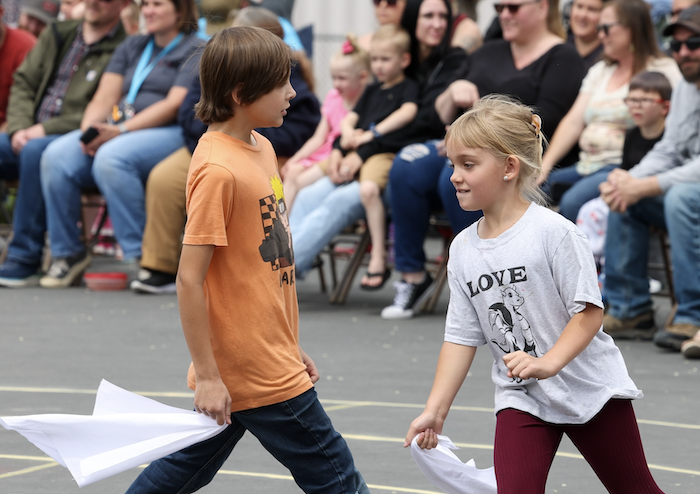
Photo credit: Geoff Liesik. Used with permission.
Children need to move. When I take more than 15 minutes to teach, demonstrate, or explore any subject, squirming, tapping, and whispering ensue. It’s not their fault: humans, especially children, aren’t built to hold still for long stretches of time. Moving, even if just to transition, jumpstarts our brain and helps students refocus.
Some of us need to move to learn. Kinesthetic learners prefer whole-body movement to process new and difficult information (Favre, Dunn & Dunn). When I do whole-group discussions with younger students, I will have my students “act” like the thing we are discussing to engage my kinesthetic learners. For instance, we “act” like seeds that sprout and grow. We “act” like animals that hibernate or migrate. I’m sure this would seem strange to the casual observer, but educators often miss opportunities to incorporate movement into teaching. Dance and drama classes embody learning through movement. Classroom educators can find reasons to use motion to reinforce learning in this manner.
One thinking routine from Project Zero that can encapsulate movement is Name, Describe, Act. Project Zero, a Harvard Graduate School of Education initiative, creates simple, research-based thinking routines which can be used to “enhance close looking, develop descriptive language, and develop working memory” (Ritchhart, Church & Morrison, Making Thinking Visible). Name, describe, act can be used to help students notice and describe images, objects, or events in ever increasing layers of detail through movement.
- Have students observe an object or image for 1-2 minutes. They may make a mental list of all the objects they see, focusing on things they can name or touch.
- Remove the visual and ask students to pair and share taking turns listing items they remember. The first person names an object while the second person describes the object, then they switch. (3-5 minutes)
- For the final activity, students will focus on what the objects are doing. Students will name verbs that describe the objects, then act like that object.
- Conclude by returning to the image to view. Students will have renewed curiosity about the object or image—and have their interest piqued for a discussion.
Find a way to get your audience moving this week!


