A Response to Teachers' Questions About the "Utah Indians" Song
Using the Decision-Based Learning Model to Evaluate Native American Resources for Classrooms
We are often asked about the song "Utah Indians" that is part of the Utah, This is the Place program often used in 4th grade. We use a decision based model to help us make decisions on whether we use resources or choose to set them aside. You can find our DBL here.
I went through the Decision-Based Learning model in regards to this specific song. I suggest that anyone who asks about the song should look at the song from this deeper lens, so they understand why or why not to use this song or any a particular resource.
Here is some of our perspective we share when teachers come to us with questions about the "Utah Indians" song that is so often used in 4th grade presentations when teaching about Utah history.
Why “Utah Indians” from Utah’s Popular Fourth-Grade Program is a Song to Set Aside
- First, there is stereotyping found in the song in the way the music of the song is written. The beat of the song has a strong, weak, weak, weak drumbeat pattern that is often referred to as the "Hollywood Native" beat. It is a beat that somehow has become attached to Native Americans in general, but is neither authentic nor accurate.
- The second point to consider is that this song is all about the past, and never brings Native Americans into the present. There is no reference to Native Americans thriving today. In our discussion with Native families and educators, this song has made many Native children feel uncomfortable and unseen as who they are today.
- This song also has stereotyping and misrepresentation in the lyrics. Even though it uses five tribal group names, the song continually refers to these unique tribal groups as one tribe in different parts of the song. The song says that all of them worship the "Great Spirit" and other things in nature, which is not true. The song states that all except the Goshute farmed, which is also not true. These are just a few of the inaccuracies perpetuated in this song's lyrics. There are many more we could point out.
- Another important thing to remember is that there are 8 sovereign nations and 5 tribal groups in Utah. The tribal nations we work with prefer they be recognized as their own tribal nation rather than being lumped together as tribal groups.
There are many more things we could point out, but I hope this helps you start your thought process about this song.
I hope this information has been helpful and will help you as you guide teachers in making a choice whether to sing this song or not.
Lesson Plans with Authentic, Tribe-Approved Songs for the Classroom
We would like to offer a couple of alternatives that might be used in place of the "Utah Indians" song.
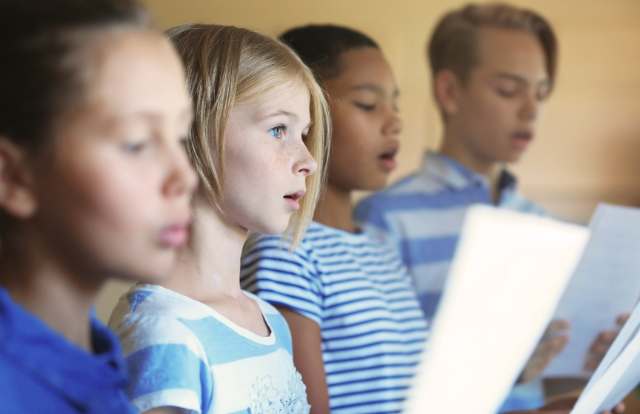
The Northwestern Band of the Shoshone Nation has given permission for students in Utah to sing two of their songs. With this privilege comes the responsibility to sing the songs with necessary knowledge and respect. Recordings of these songs can be found in the following lesson plans:
Both songs need to be sung with context for singer and the listener. Students can perform these songs, but whenever they are performed, the following paragraph should be read immediately preceding the singing to provide context for the performance.
"There are many Native tribes in the United States with distinct languages and cultures. Within Utah there are five tribal groups, but more importantly there are 8 federally recognized sovereign tribal nations. These eight sovereign nations are the Northwestern Band of the Shoshone Nation, the Skull Valley Band of Goshute, the Confederated Tribes of the Goshute Reservation, the Ute IndianTribe of the Uintah and Ouray Reservation, The Ute Mountain Ute Tribe, the Paiute Indian Tribe of Utah, the San Juan Southern Paiute Tribe, and the Navajo Nation."
"The song we are sharing today is specifically from the Northwestern Band of the Shoshone Nation and does not represent other Native American groups. We hope other Native tribes will respect the Northwestern Band of the Shoshone Nation's choice to share this song from their culture. Not all Northwestern Shoshone songs are appropriate for elementary students to sing. Many of the songs are ceremonial songs or sung for specific reasons or at specific times. However, Patty Timbimboo-Madsen, the cultural and natural resource manager for the Northwestern Band of the Shoshone Nation, has given permission for students to sing this song, ["Damen Doiya" or "Pengwi bai Anoga."] She believes that singing this song will help students to better understand how Northwestern Shoshone people see their surrounding environment. This song is traditionally sung while passing time, perhaps when a Shoshone is outside and sees something that brings this song to mind, like the clouds floating or being near the mountains or streams. We express our gratitude that the Northwestern Shoshone have graciously shared this part of their culture with us and we will do our best to respectfully sing it."
Within the next month, we will also have a lesson plan available on our website focused specifically on the 5 tribal groups and 8 sovereign nations within Utah.
We also have another lesson plan, Shí Naashá, that uses a Diné/Navajo song that can be sung by anyone at any time of the year. This lesson is in the final approval stages with the Navajo Nation and will be published as soon as we receive the final signature for publication.
We also collaborated with UEN to create a video that shares the 5 tribal groups and 8 sovereign nations within Utah in a way that makes it easier to remember. You can find that video here.
We have also worked with UEN to update their American Indian resources page. There are many incredible resources available for teachers. This site aims to amplify Native voices by providing current, accurate and culturally appropriate resources. Please check back regularly for updated resources.


