Rounding Out Learning: Re-focus on Small Motor Skills
Laura Giles is a lover of all things art, a first-grade teacher in Alpine School District, a writer for the Daily Herald newspaper, an Arts Leadership Academy graduate and has earned the Arts Integration Endorsement from Brigham Young University. She can be reached at LauraCGiles@gmail.com.
Building with blocks, drawing pictures, using fingerpaints, constructing with clay, cutting out paper figures, using a paintbrush, putting together puzzles, scribbling and even turning pages of a book are all tasks that children used to do regularly, even daily. But times are changing and a child’s day today may not include any of the aforementioned activities. Teachers are seeing a decrease in children’s fine motor skills. Even upper-grade teachers are noticing that kids can’t cut with scissors effectively. It’s not just children either. According to a 2018 article published by the BBC titled, “Surgery Students Losing Dexterity to Stitch Patients,” medical students are having difficulties cutting and sewing – skills required to save lives. According to the article, Professor Roger Kneebone of Imperial College, said that students have spent so much time in front of screens and so little time using their hands that they have lost the dexterity for stitching or sewing patients. “It is a concern of mine and my scientific colleagues that whereas in the past you could make the assumption that students would leave school able to do certain practical things - cutting things out, making things - that is no longer the case," he said.
The Impact of Technology on Young Students
Alpine School District Kindergarten Teacher Jennifer Cherry has seen the decrease of fine motor skills in incoming students over the years “Our Pre-K students are technology natives. They engage in multiple learning activities on the digital devices in their homes. It's easy. No mess is involved. It is entertaining and engaging. I think there are several positives associated with learning through technology, but it isn't a substitute for coloring with crayons, cutting with scissors, and learning the do's and don'ts when it comes to using glue,” she said. Cherry said that humans have a natural desire to create things. “We want to build and make things with our hands. Even if we get a little messy, or make a bit of a mess in the process,” she said. “Our incoming kindergarten students are very confident when it comes to exploring any new program on a digital device, but very few of them are confident when it comes to cutting shapes out of paper.”
At Silver Lake Elementary, where Cherry teaches, the kindergarten team has made an action plan to address this issue. “As a team we came together unanimously and decided our biggest priority at the start of this school year was to dedicate time to teaching fine motor skills. During the first six weeks of school, the students participated in fine motor boot camp groups, focusing on pencil grip through letter formation, scissors and cutting and pencil grip through drawing and coloring. Cherry said that her kindergarten team researched everything that they could find on best practices on how to teach pencil grip and scissor grip. Their school’s occupational therapist helped and introduced them to the school district’s occupational therapy website, which was full of ideas and videos. “We saw so many positive successes starting our year off with a six-week intervention boot camp. We will absolutely repeat this learning activity next year,” she said.
Elementary Motor Skill Strategies
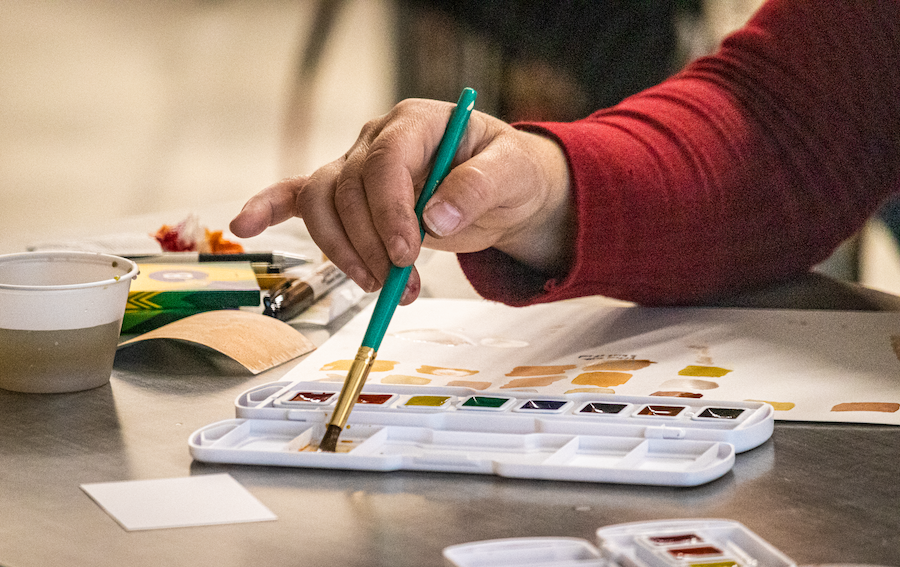
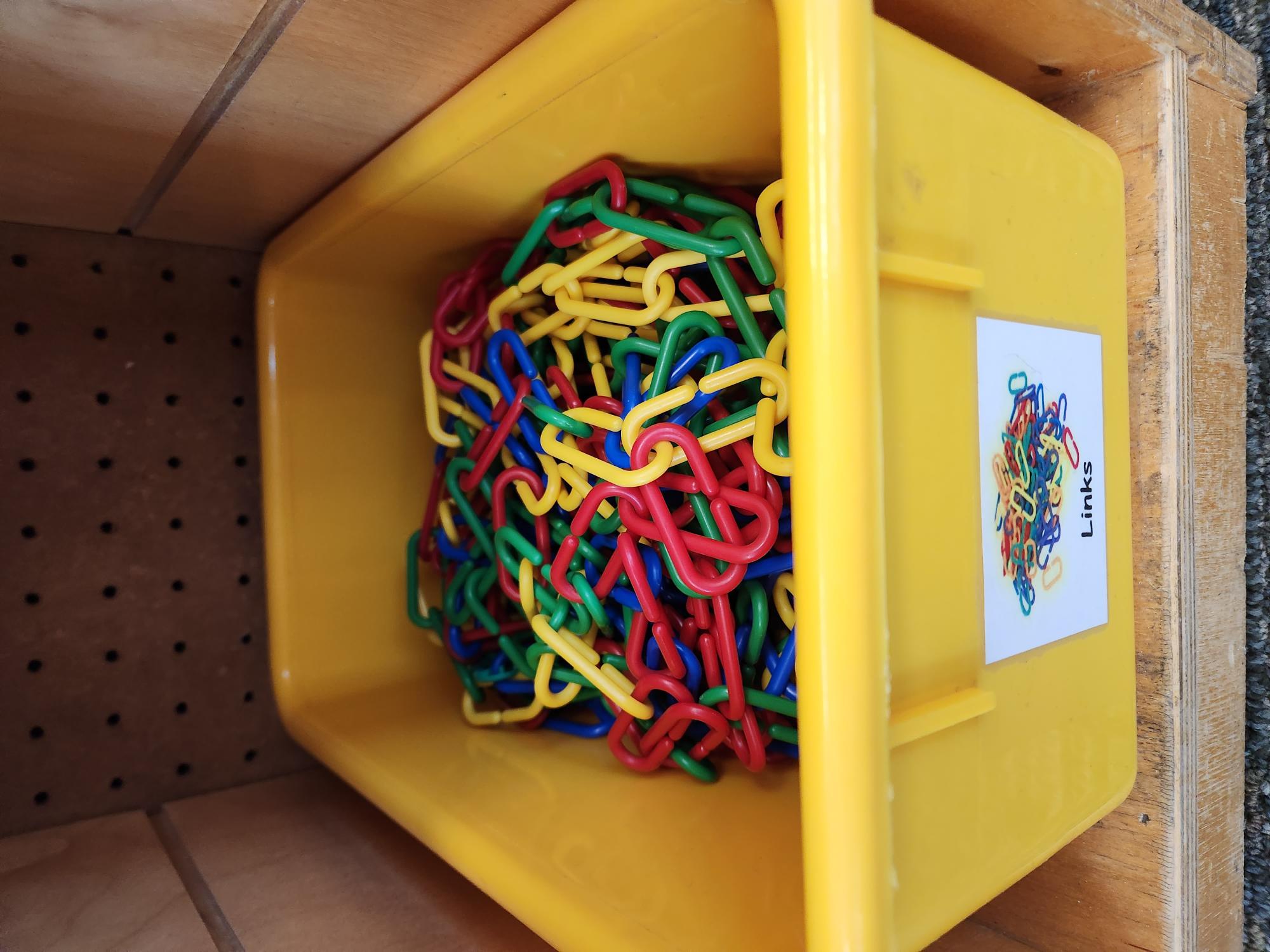
Dorie Haws, master teacher at Brigham Young University’s Child and Family Studies Laboratory Preschool, encourages parents to give their young children opportunities to use playdough, glurch, and Oobleck to grow their small motor muscles. “We also talk about tearing paper – especially junk mail – as they rip and rip and rip, they are using the same muscles as when they are using scissors,” she said. In the preschool, they use “tear art.” This involves children tearing paper into the shapes that they want to create artworks. “We use painting on tables as well as easels because it requires different muscles to paint the different ways. Having children use watercolors as well is great practice. We find that many children haven’t used these before at home so teaching them the how of using watercolors is something that could happen at home too,” Haws said.
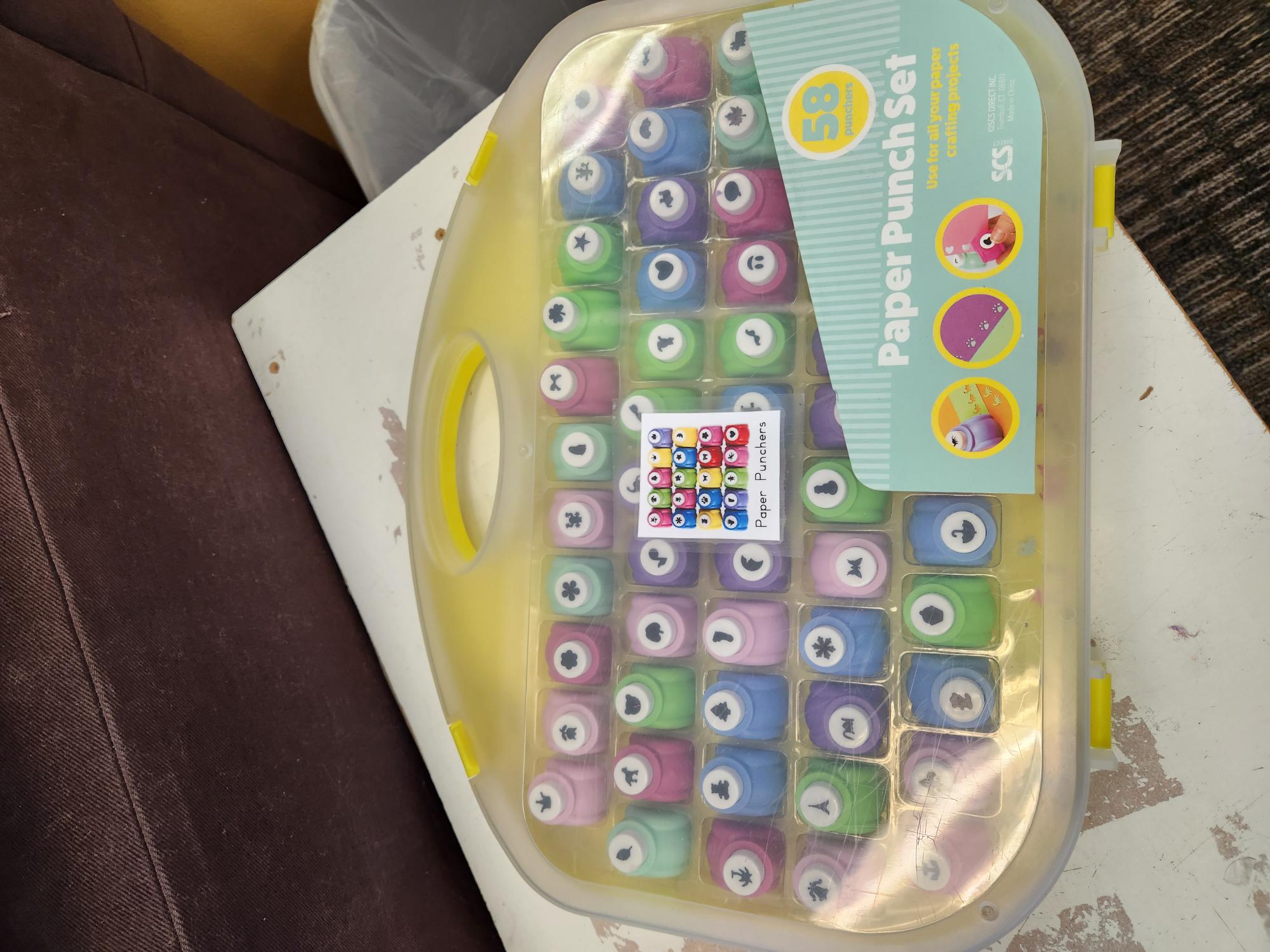
Additionally, the preschool classroom has a cutting box that is similar to a fishing tackle box. In the box are scissors and different sizes of papers with many different types of lines drawn on them so the children can follow the lines. “We also talk about how one hand is the driver and the other one is the cutter – the driving hand needs to turn the paper so it’s easier for the cutting hand to know where to go next. ‘Thumbs to heaven’ is a phrase we use for the children who like to cut ‘upside down,” Haws said.
Introducing Fine Motor Skills Through the Arts
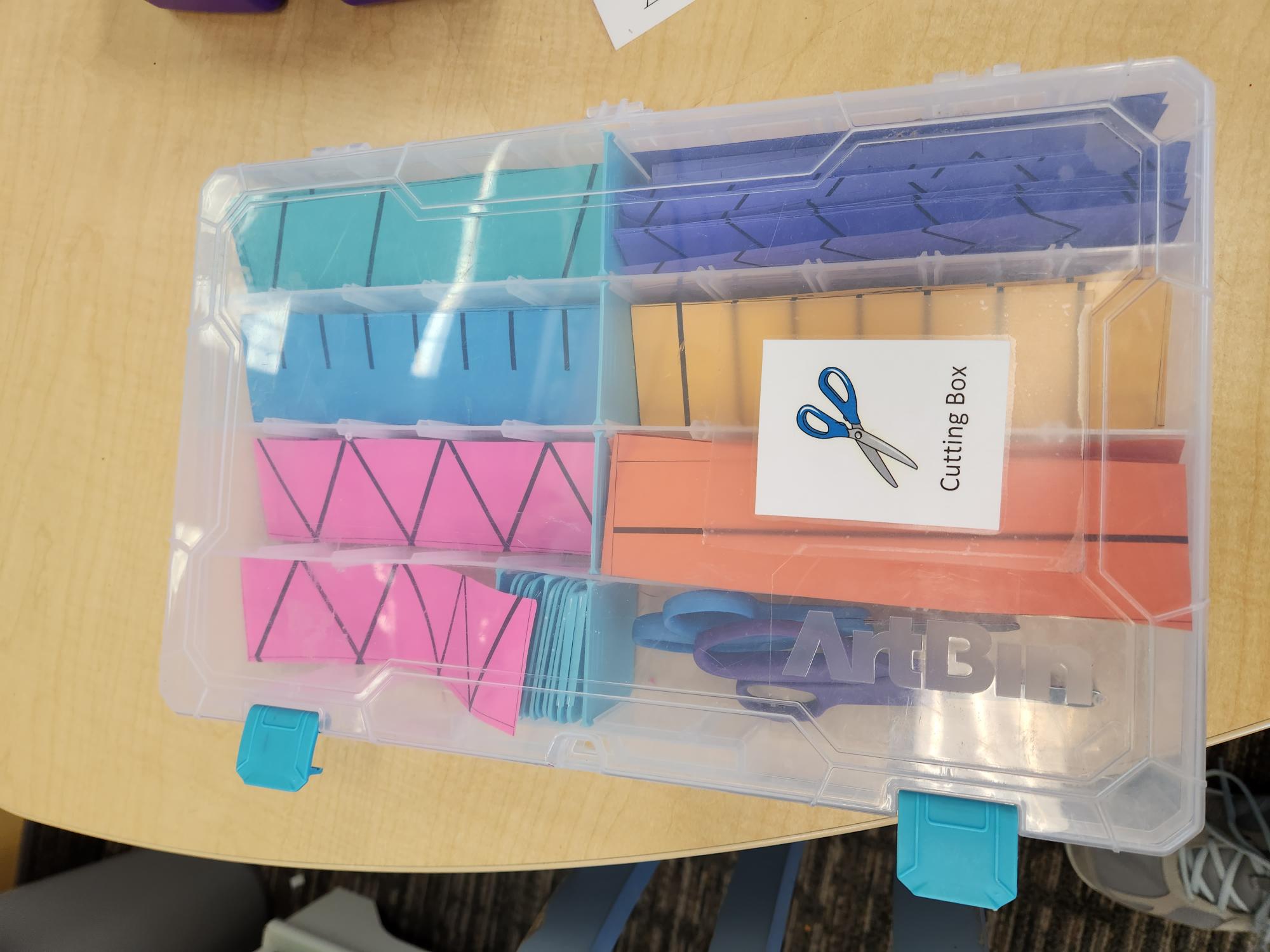
Many necessary small-motor skills can be taught and practiced through integrating the arts into other curricular areas. For example, when teaching about addition and subtraction, children can use small blocks to solve the problems. When teaching about story structure, children draw the beginning, middle and ending. When teaching about the sun and moon and stars, children construct these out of clay. When teaching about shapes and fractions, children cut shapes out of paper, then cut them into equal shares. Yes, integrating the arts into the curriculum is the key to helping students master many skills, including fine motor skills. According to National Association for the Education of Young Children (NAEYC.org), there are many activities that can increase muscle strength and coordination. Some of these include:
- Cut with scissors
- Finger paint
- Use a paintbrush
- Play with playdough
- Create with clay, using tools such as popsicle sticks
- Draw or scribble
- Write with crayons, pencils and markers
- Put together puzzles
- Build with small blocks
- Play with puppets
The Cutting Simples Shapes Song Featuring Mr. Alligator
Glurch:
Materials:
1 1/2 cups water
2 cups Elmer's glue
1/3 cup warm water
1 level tsp. Borax
Directions:
1. Mix together in a large bowl: 1 1/2 cups water and 2 cups Elmer's glue
2. Then in another bowl, dissolve 1/3 cup warm water and 1 level tsp. Borax
3. Then add the Borax mixture slowly to the glue mixture. Feel the coagulation takes place
4. Work with hands to get silly putty. You will have an extra liquid leftover. If you want to make
more silly putty just add another level tsp. of Borax to another 1/3 cup of water, dissolve and add
the leftover glue mixture and proceed as before
Puff Paint
Materials:
Flour
Salt
Water
Coloring; can use tempera paint (wet or dry), food coloring, or natural coloring agents such as
beet juice, raspberry or blueberry juice reduction.
Directions:
1. In a bowl, mix equal parts flour, water, and salt (recommended: 1/2 c. of each). Mix well with
a spoon or whisk until you don't have clumps. Add more or less water depending on the
consistency of paint you would like.
2. Once blended, add a smidgen of coloring (SMIDGEN!!!) The more coloring you add, the
more vibrant your paints.
Oobleck:
Materials:
1 cup corn starch
1/2 cup water
Directions:
1. Put corn starch in a bowl and add water. Mix together well
2. If needed add 1-2 TBL more of water to reach desired consistency
Play Dough
Materials:
2 cups flour
1 cup salt
4 tsp. Cream of Tartar
2 cups water
2 Tbsp. oil
Food coloring (optional)
Spice for Scent (optional)
Directions:
1. Mix flour, salt, and cream of tartar in a heavy aluminum pan
2. Add water, oil, color, and spice
3. Heat on stove 3 minutes or until mixture pulls away from the pan
4. Remove from heat and knead immediately
5. Store in an airtight container
6. Clay keeps for several months
Colored Pasta
Materials:
Pasta
Alcohol
Food coloring
Ziploc bag
Directions:
Put pasta in a Ziploc bag with alcohol and food coloring. Mix. Let it dry on top of a towel.


