Teaching the Skill of Abstraction
A Purpose for Abstraction in the Classroom
We’ve all seen it. The young student scribbles all over the page. One color, maybe two, maybe the whole crayon box is used. They proudly bring their work to you: “Look at my rocket ship!” You're surprised. What a unique rocket ship!
Intentional abstract artists or not, budding student artists can use different forms of abstraction to elevate their creativity and grow their expressive skills.
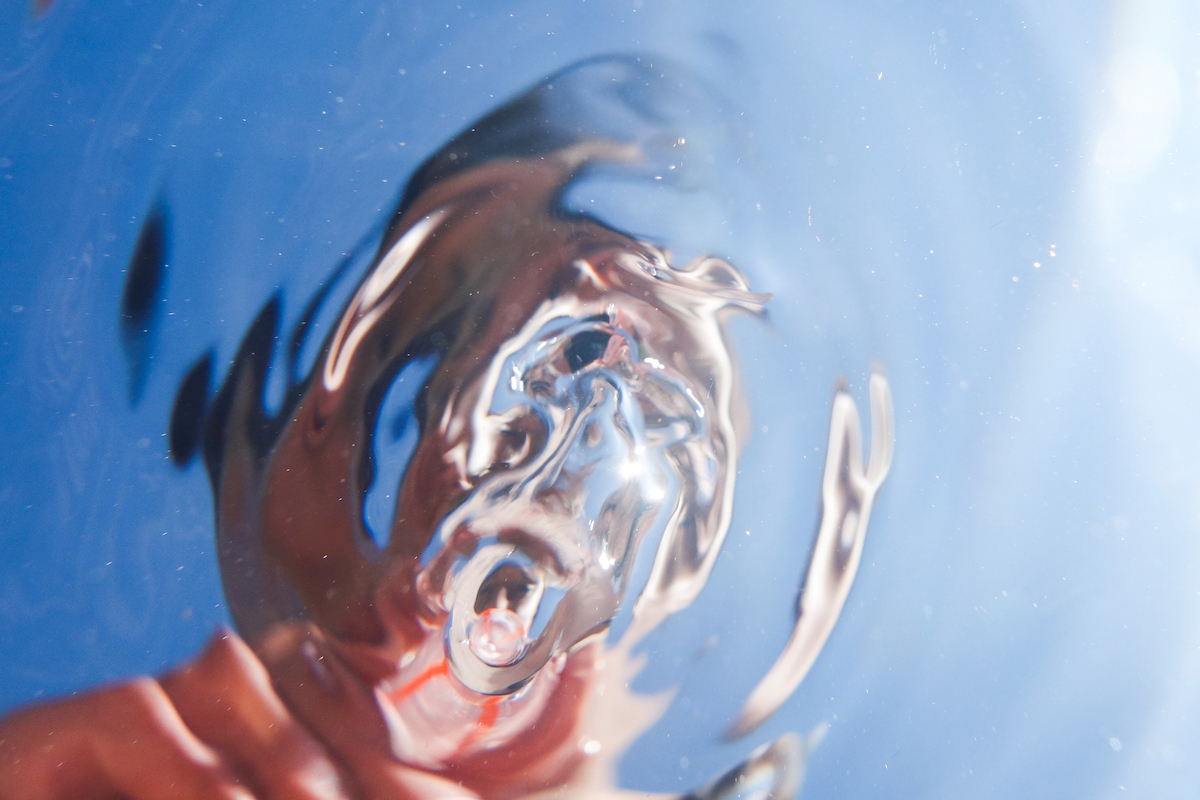
Abstraction, in the context of art, refers to the process of distilling or simplifying elements from reality to create a representation that emphasizes essential qualities or concepts rather than realistic details. It involves reducing objects, forms, or ideas to their basic shapes, colors, lines, or gestures, often departing from direct representation or literal interpretation.
Abstraction can vary in degrees, ranging from slight modifications of reality to completely non-representational forms. It allows artists to convey emotions, concepts, or aesthetics in a more subjective and expressive manner.
Learning the skill of abstraction cultivates critical thinking, creativity, and expressiveness. Abstraction fosters a deeper understanding of visual communication and problem solving by challenging students to distill the essence of subjects into fundamental elements and principles. Through abstraction, students explore unconventional ways of representing reality, allowing for personal interpretation and conveying emotions, ideas, and concepts in evocative and symbolic ways. Abstraction helps students get out of the rut of trying to produce exactly what the teacher modeled for them.
How Artists Apply Forms of Abstraction
Depending on an artist’s intent, they may dutifully apply their studio training and understanding of the principles and elements of their art form to either 1) create a literal representation of the real world (pantomime, portrait, documentary), or 2) manipulate realistic representations of the real world through methods and forms of abstraction to accentuate the emotion or mood of their message.
Below are four of many strategies artists use to manipulate the principles and elements of their art form to abstract their work and make it less representational.
Repetition
The recurrence of an action or event (color, movement, image, line, energy, texture, sound, gesture, etc) or basically doing something over and over.
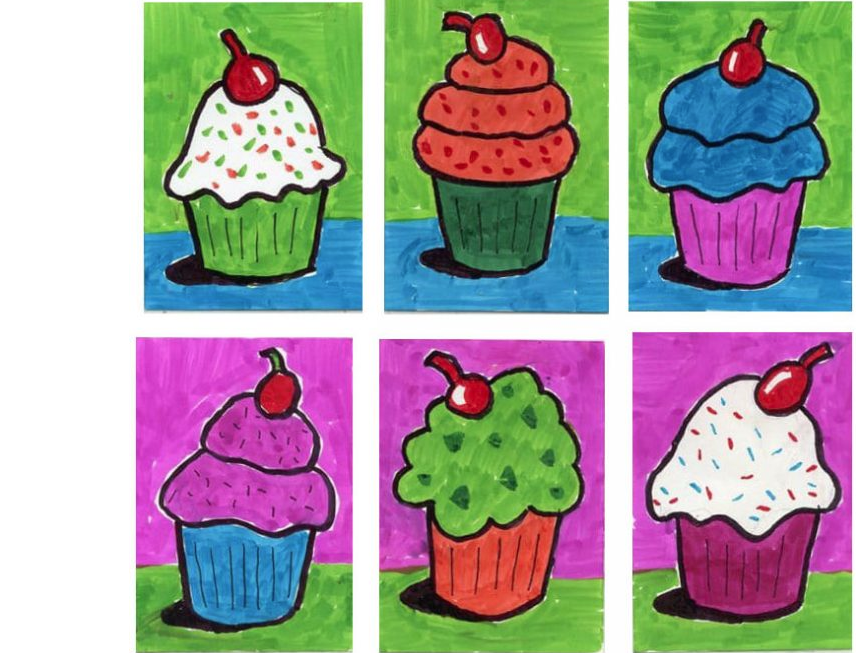
Photo Credit: artprojectsforkids.org/how-to-draw-a-cupcake
Exaggeration
The act of emphasizing a specific aspect or element of the idea, representation, or object. In language arts, this means describing something with hyperbole. In visual arts, an example of an exaggeration is an artist creating cartoon caricatures representing something as larger or smaller than it is in reality.

Inversion
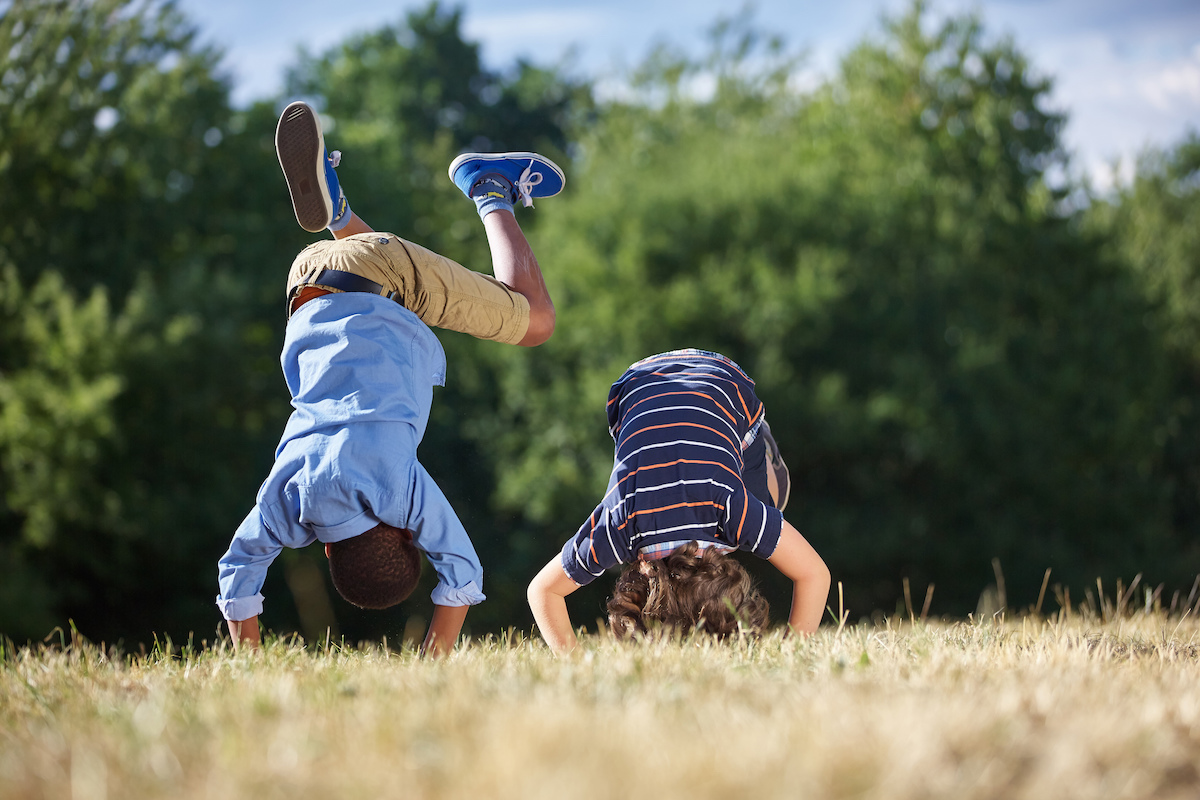
Artists place movement, lines, voices, or relating objects or elements upside down or in an opposite position, order, or arrangement.
Distortion
Artists pull or twist elements of the work out of shape to change the form, and/or to create a false impression.
Applying Abstraction to a Dance Lesson
As a dance educator in the public schools, I adapted a lesson plan created by Marilyn Berrett for students to practice their sports skills:
Phase 1: Representing Sports Activity Realistically
The students assembled in lines on one end of the room to practice drills. The first drill was dribbling a basketball to the other end of the room and back. They were encouraged to practice a few shots to an imaginary basket as well.
The second drill was tossing a frisbee, football, or dodgeball across the room and back to the person in line behind them.
The third drill was swinging a hula hoop around their hips while they walked as far across the floor and back as they could.
Phase 2: Minimally Abstracting Sports Activity
After performing all three skills as they would be performed in PE class, I removed the props and invited them to travel across the room and back performing the physical activity without the ball, frisbee, or hula hoop.
Phase 3: Increasing the Opportunity for Abstraction
After experiencing the physical movement without the prop, I invited the students to again move across the floor while applying different forms of abstraction to the movement. They were encouraged to exaggerate their throws, invert their hula hoop action with a different body part, or find rhythmic ways to repeat their dribble. The possibilities were endless and the movement exploration became very entertaining and engaging for us all!


