Why Dance Barefoot?
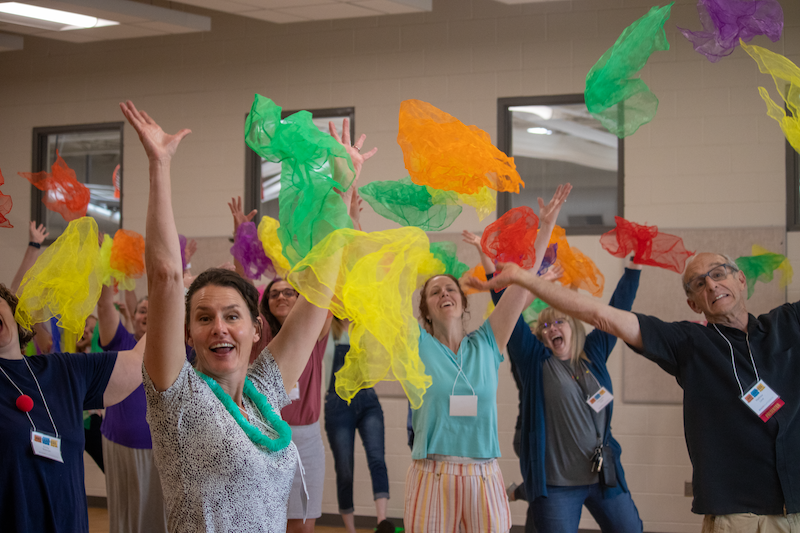
Teachers dancing at an Arts Express Conference.
Dancing Without Shoes is Not a Stinky Idea
If you teach school, you know how students smell. It is not always a pleasant smell, is it? So the idea of taking shoes off at school might be a no-go for you already, but hear us out when we say the benefits of dancing barefoot totally outweigh the risk of smell and germs. Plus, there are ways to do it in a clean way and mitigate smell (see the end of the article).
This article delves into the advantages of engaging in activities without shoes. It shines light on how students can experience reduced foot and body conditions, improved circulation, better posture, and even heightened intelligence. As educators, promoting such practices can contribute to our students' holistic well-being and development.
Benefits of Dancing Barefoot at School
Greater Balance
By feeling the ground, the vestibular system (or balance system) of the brain wakes up, stimulating new neural connections and remapping the mind for greater balance. Going barefoot activates proprioception, which improves balance and movement. Proprioception is the unconscious perception of the body in space, and the feeling of the body's orientation and movement within the surrounding space. By going barefoot, the body feels and connects to the environment, which aids balance and develops natural movements.
Greater Strength
Going barefoot strengthens the stabilizing muscles of the foot and ankle. Shoes stabilize and support the foot and ankle so much that the feet become reliant, weak, and lazy. Strengthening the small muscles of the feet enhances balance, decreases the likelihood of injuries, and improves overall active performance.
Healthier Feet
The body works on the "use it or lose it" principle. Use muscles regularly, and they remain; don't use them, and they will deteriorate. Wearing shoes artificially raises the arches of the feet and directly reduces the ability of the arch muscles to work properly. When people start going barefoot, the feet reawaken and begin to strengthen again. Going barefoot strengthens the arches of the feet.
Fewer Feet and Body Conditions
Plantar fasciitis is another term for pain and inflammation on the bottom of the foot. As the feet strengthen, plantar fasciitis diminishes, foot neuromas (pinched nerves) go away, bunions begin to dissipate and other conditions such as hammertoes go away. Arthritis in the foot can begin to slowly improve as the foot develops greater strength, flexibility, and blood flow. Since they form a supportive base for the entire body, almost 30 percent of the body’s joints are found in the feet. Often, knee and back pain stem from improper foot mechanics. Artificial support from shoes can place unnatural pressure on the knees, spine and neck. Foot mechanics affect the whole posture of the body. Moving on bare feet can create a healthier body.
Improved Circulation
Going barefoot not only enlivens long-dormant muscles of the feet and legs, but also improves blood flow to support increased movement. A greater blood supply means fewer aches, pains, and varicose veins, as well as better circulation, creating warmer feet and legs in cold weather.
Better Posture
A lifetime spent in a traditional shoe creates an unhealthy, unconscious habit of moving with a pronounced pelvic tilt. A typical running or walking shoe is actually at least a one- to two-inch padded high heel. To keep from falling over while wearing these shoes, the body is forced to move the glutes back, bending forward at the waist, straining the hamstrings, lower back, upper back, shoulders, and neck. This position also significantly torques the hips, knees and feet when running. Leaving shoes off can begin to reverse this tendency. By feeling the ground, the nerve endings on the bottoms of the feet communicate to the brain, correcting posture when the body is leaning forward. With practice, bodies run, walk, and even stand with better posture, more like a dancer or model. Proper posture greatly reduces the levels of stress and strain on the body and results in better oxygen flow. Looking better and getting taller without any extra work are great side benefits, too!
Kids Get Stronger and Smarter
With childhood diabetes and obesity on the rise, kids’ health is hitting an all-time low. Health begins with the feet: strong feet enable walking, running, biking, dancing, and more. Weak and painful feet curtail the desire to exercise. The American Podiatric Medical Association recommends keeping kids out of shoes for as long as possible, because evidence shows that shoes weaken and deform the feet. Keeping children out of shoes not only helps them stay active and healthy, but feeling the ground also strengthens their senses and helps remap their brains. According to Dr. Merzenich, one of the nation's leading neuroplasticians and co-inventor of the cochlear implant, barefoot stimulation improves memory, focus, concentration, and overall intelligence.
Decrease Blood Pressure
Studies show that stimulating the nerve endings on the bottoms of the feet decreases blood pressure and reduces the parasympathetic (cortisol-based) fight-or-flight response within the body. In other words, stress and inflammation throughout the entire body noticeably decline.
Reduces Inflammation
According to the World Health Organization, diseases resulting from chronic inflammation pose the greatest threat to human health, and include diabetes, lupus, multiple sclerosis, cardiovascular disease, cancer, asthma, allergies, arthritis, and Alzheimer's disease. Walking barefoot outside reduces levels of stress hormones like cortisol and adrenaline in the body, and creates feelings of connection to the earth. Stress reduction lowers inflammation levels, and may help reduce incidence of these illnesses.
Reflexology
Reflexology is the process of stimulating specific nerves on the bottom of the feet to target distinct areas of the body, including the immune system. Reflexology reduces inflammation, pain, blood pressure, and stress levels, and encourages many other healing processes in the body. Research demonstrates significant body-wide reflexology benefits by going barefoot and stimulating the soles of the feet.
Socks, Safety, & Sanitation Tips for Barefoot Students
1. The Smell: It's true; not every child takes a bath before school. Some are still wearing last week's socks, and some have no good reason for their feet to smell the way they do. But do not fear! After removing their shoes, you can give each student a wipe to clean their feet. Yes, it's another supply and more waste, but it's worth it to help students ground themselves to the earth and their school space.
2. Managing Cleaning Supplies: Integrate the ritual into your routine. Stand at your door and pass them to each student as they enter your space from another activity. Give them each a package to keep at their desk. Or use a spray bottle with sanitizer and fresh clothes to dry their feet. Remember how COVID-19 taught us a thing or two about managing germs on our hands? We can apply these ideas to our feet too! I don't think there are masks for feet, though.
3. If barefoot is off limits at your school (it is always good to be aware of school and district policy) but socks are okay, then just be careful that the floor is not so slippery that students are at an increased risk of injury with their shoes off and their socks on. If students wear socks, a carpeted area is best for mitigating the risk of slipping. If the carpet is still too slippery, you can put out yoga mats or other flooring materials that create more traction and friction for your student's dancing feet.
Find dance lesson plans on our website. Shoes are optional for these lessons. Check them out and give barefoot dancing a shot in your classroom!
-Compiled by Courtni Giles and edited by Nora Ballantyne & Heather Francis

Download the Dancing Barefoot Poster from our website by clicking here.


